Anxiety is one of the most common reasons people seek out acupuncture, and one of the conditions where practitioners consistently report meaningful results. But clinical experience is one thing. Objective, imaging-based evidence is another. A study published this spring in CNS Neuroscience & Therapeutics takes an important step toward the latter, using brain imaging to show not just that acupuncture reduces anxiety symptoms, but how it changes the brain activity underlying them.
What the Study Did
Seventy patients diagnosed with Generalized Anxiety Disorder (GAD) under DSM-5 criteria were randomly assigned to either a four-week acupuncture treatment protocol or a wait-list control group at the First Affiliated Hospital of Hainan Medical University. Anxiety severity was measured using the Hamilton Anxiety Rating Scale (HAMA), a clinician-administered tool assessing both psychological and physical symptoms of anxiety. Resting-state fMRI was used to examine brain activity before and after treatment.
The imaging analysis focused on regional homogeneity (ReHo), a measure of how synchronized neighbouring neurons are within a given brain region. In anxiety disorders, certain regions show elevated synchronization, reflecting persistent over-activation of circuits involved in emotional processing.
What They Found
The acupuncture group showed significant reductions in anxiety severity on the HAMA. The wait-list group showed no statistically significant change. More notably, the imaging data revealed that acupuncture reduced ReHo values in several brain regions associated with emotional regulation: the amygdala, hippocampus, anterior and posterior cingulate cortices, putamen, and precuneus.
The amygdala finding was particularly striking. Reductions in neural synchronization within the amygdala correlated directly with reductions in HAMA scores, meaning patients with the greatest calming of amygdala activity had the greatest clinical improvement. A parallel set of animal experiments pointed to glutamate, the brain’s primary excitatory neurotransmitter, as a likely mechanism. Acupuncture appears to reduce neuronal hyperexcitability, bringing overactive circuits back toward balance.
The acupuncture protocol was standardized across the study: Baihui (GV20), Neiguan (PC6), Shenmen (HT7), and Taichong (LV3), needled bilaterally with lifting, thrusting, and twisting manipulation over each session.
Why This Matters
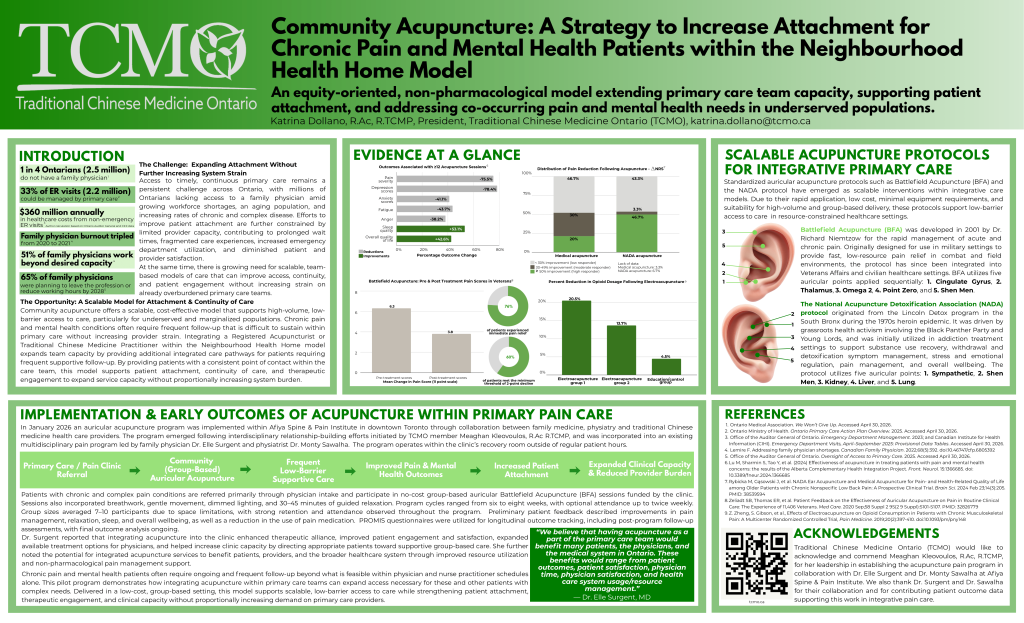
Anxiety disorders affect roughly one in four Canadians at some point in their lives, and demand on mental health services in Ontario continues to far outpace supply. Many patients arrive at acupuncture clinics after finding that medication alone is not enough, or that they would prefer a non-pharmacological approach. This study gives practitioners and patients alike something concrete to point to: measurable, imaging-confirmed changes in the brain regions responsible for the very symptoms being treated.
It also speaks to point selection. GV20, PC6, HT7, LV3 are not arbitrary choices. They are classical points with long-established TCM indications for shen disturbance and emotional regulation, and this study adds neurobiological weight to that tradition. The fact that the brain changes correlated directly with clinical outcomes makes the case even stronger.
Research like this won’t and shouldn’t be the only basis for a patient’s decision to seek acupuncture for anxiety. But it adds to a growing body of evidence that what we observe clinically has measurable biological correlates. That is good for patients, and good for the profession.
Source: CNS Neuroscience & Therapeutics, April 2026. Study conducted at the First Affiliated Hospital of Hainan Medical University.